Blog
how do brands use AI to create social content?
Discover how brands can use AI to enhance social creatives with examples from Spin's test subject.
Discover how brands can use AI to enhance social creatives with examples from Spin's test subject.

Newsflash: AI slop exists because the creative process needs people – and many brands are simply skipping that step.
AI is a tool – it can’t replace creative thinking. But it can give your creative teams more to work with. And when the pressure is to produce more, faster, AI is an obvious place to look.
It can take a product shot and put it somewhere it could never have been photographed. It can create variations without the need for another time-consuming shoot. It can help teams explore new visual directions, different environments and unique compositions without starting from scratch every time.
But if everyone is using AI to make more, how do you make sure your brand doesn't just blend in with the rest? It comes down to how you use it, not whether you do.
Using AI to generatea finished image from a text prompt is old news. And lazy, if we’re honest.
Creative AI use now works on a much broader spectrum: from extending assets brands already have, to building entirely new environments that would be difficult to create through traditional production.
We’re not talking about asking ChatGPT to make a flyer for a car boot sale. We’re talking about using AI in an actual creative production process.
Our NOEWE project (more on this later) took a simple productshot and used a mix of editors, animators and AI tools to make that one shotwork hard.
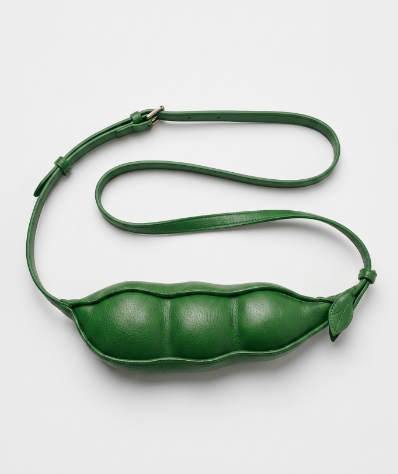
The result wasn’t just more content. It was more ways for anidea to be explored.
Not every new piece of social creative needs to be a new production job. Used well, AI helps teams get more usage out of the work they've already done:
- Extend backgrounds and settings
- Create new crops and compositions
- Present products in different environments
- Adapt one asset for a dozen different placements
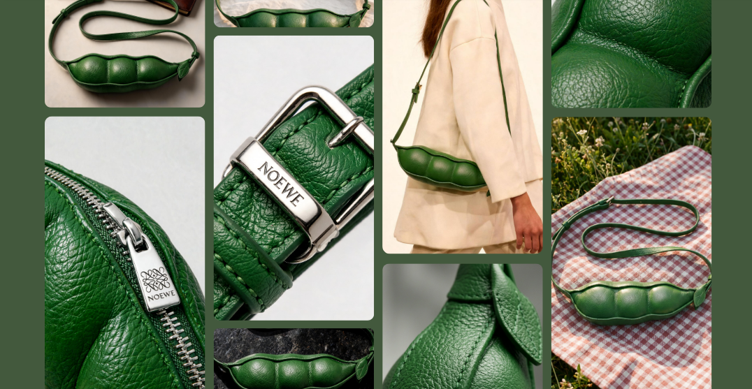
A few years ago, putting a luxury handbag inside a surreal, fully art-directed world might have meant a location, set build, props, photography and a serious VFX budget.
Now, social creative teams can explore that kind of idea much more easily.
You can put a product somewhere impossible. Build a world that doesn't exist. Push an idea from realistic to surreal and back again.
With NOEWE, we used AI to build out the visual of the peabag growing from a pea plant, complete with vines and a tactile editorial worldaround it.
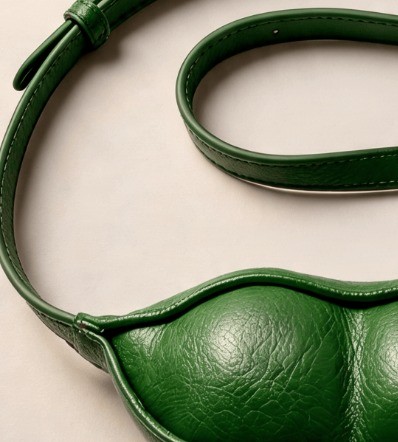
AI doesn’t just make production faster or simpler, it can make creative ideas that once felt out of reach worth exploring.
AI also makes it easier to push one central concept in different directions before deciding what’s worth producing.
That might mean changing the hook, audience, message, format, environment or visual treatment to see which version gives the idea the strongest creative angle for a particular audience, platform or campaign objective.
But more variations don’t automatically mean more creative diversity. Fifty versions of essentially the same image are still one idea. There’s still value in volume though. For paid social in particular, creating lots of variants is useful when each version tests a genuinely different idea.
AI makes that kind of experimentation much easier to do at scale.
Social rarely stands still. AI can help turn a strong static asset into motion without rebuilding the creative from scratch.
That could mean animating one part of a product image, introducing environmental movement or pushing an existing visual into a more ambitious sequence.
And it doesn’t have to mean jumping straight to fully AI-generated video. Sometimes the strongest use of AI is a subtle intervention rather than a completely generated execution.
What does it look like when you put AI into a real social campaign? We invented a luxury brand to show you.
Meet NOEWE, your new favourite (fake) fashion brand.
NOEWE is a fictional luxury brand, complete with a hero product, visual identity and fans (if you count the Spin team). We used AI to build a campaign for NOEWE’s Gousse bag – also not real, sadly – to see just how far we could stretch one product shoot.
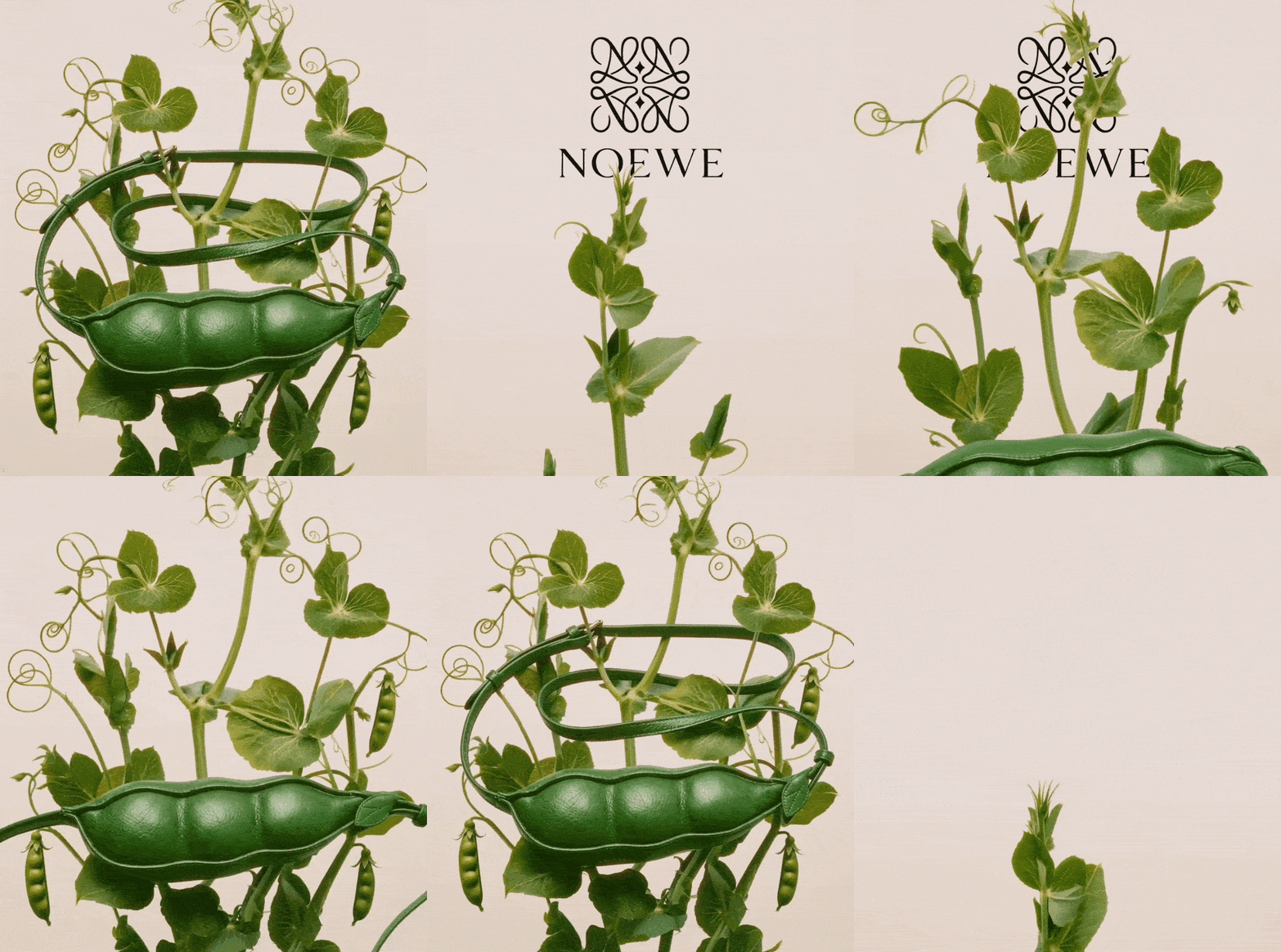
The Gousse bag, an eye-catching but ridiculously impractical pea-pod-shaped handbag, gave us plenty of excuses to have fun with this campaign.
But we started with limited assets. The photography was strong: carefully composed, well shot, entirely appropriate to the brand's luxury positioning.
The problem was that a small bank of static imagery couldn't give a social-first campaign the range and volume it needed.
We didn't start with AI; we started with human creativity.
Asking an AI tool to "make some cool social content" is basically handing your creative direction to the internet's collective Pinterest board – and the reason why so much AI content looks the same.
Instead, we built a clear understanding of what the campaign needed to do, what the product needed to look like and what the creative needed t o communicate.
AI only became part of the production process once that was locked in.
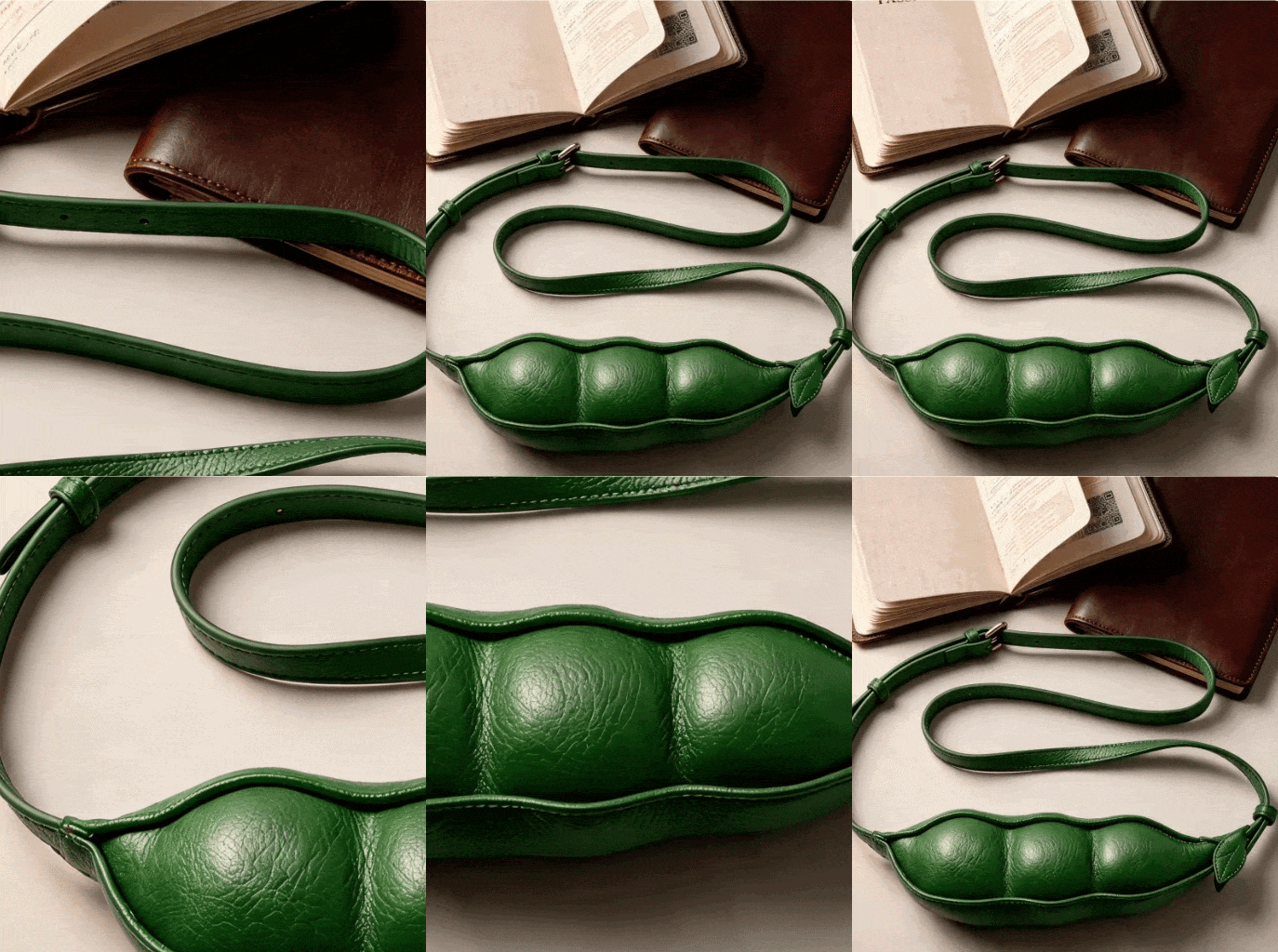
We used a reference image of the Gousse bag as the product anchor, then explored a surreal editorial world in which the pod-shaped bag appeared to grow organically from a pea plant.
The brief for that world was clearly defined. A luxury editorial feel, handmade and tactile set design, premium rather than obviously synthetic, a warm neutral backdrop, the real product as a constant visual reference.
AI produced the raw material from our uploads. It didn't produce the finished asset.
After generation came the creative edit. Refining the output, correcting product details and applying the finishing touches such as colour grading, blur, grain that brought everything into NOEWE’s visual world.
Our creative team went through everything AI had made. Some of it worked, some didn't. Some of it looked technically impressive but wasn’t right for the brand. Some had interesting elements but needed pushing further.
So, we redirected, refined and iterated.
The aim was never a single impressive AI image. It was a varied body of AI-enhanced social creative that could work across different platforms, audiences and contexts, while still feeling unmistakably like the brand we created.
AI expanded the production possibilities. It did not remove the production process.
If you’re bringing AI into your social workflow, don’t just throw a brief at your favourite AI platform and see what it spits out.
The fundamentals of good social media marketing haven’t changed. In fact, when the pressure to produce is higher, those fundamentals matter even more.
Don’t start with: what can we make with AI?
Start with the gap in the campaign. Maybe you only have static photography. Maybe you need more visual variety without another shoot. Maybe the idea calls for a location or set that isn’t practical to build.
Solve the creative problem first. Then decide whether AI is actually the right tool to solve it.
Before you start generating, establish the brand elements and campaign non-negotiables that are fundamental to the project:
· What needs to look exactly like the source material?
· What makes this campaign unmistakably your brand?
· What creative guidelines for this particular project need to stay?
Establishing the visual cues, product details, messages and characteristics that can't change gives you boundaries to experiment within and protects brand distinctiveness while you do it.
AI content starts to look generic the moment the tool is doing all the work.
Start with strong source assets and a clear idea of what you're trying to achieve. A product image with a strong brief can become the basis for dozens of interesting creative directions.
A vague prompt typically leads to vaguely interesting images, and not much else.
AI's first attempt is rarely the right one. Just like campaign_graphic_finalFINAL.png is always better than campaign_graphic.png.
Professional AI creative isn’t about finding one magic prompt. It’s iterative art direction involving composition, materials, lighting, camera position, texture, references and movement until the output actually starts to look like your idea.
Whilst AI can run unsupervised, it doesn’t mean it should run the creative process. Human judgement is what spots the technically impressive image that’s completely wrong for the brand – and knows what needs to change.
The useful question isn’t whether AI creative performs better than non-AI creative.
Test actual creative differences: surreal vs realistic, static vs motion, product-led vs lifestyle-led, one opening hook against another. Then judge them on the same metrics you’d use for the rest of the campaign, from hook and hold rate through to conversion, CPA or ROAS.
AI doesn't just contribute to the final frame. For the right project, it can be part of the creative process much earlier on.
AI can help with trend and cultural signal analysis, giving creative teams more to work with when they’re looking for a way into an idea. It can help map out creative territories, generate different routes from an initial concept, or visualise a direction through storyboards and pre-vis before a shoot begins.
For paid social, it can also help teams explore different hooks, captions and creative frameworks around the same core idea, making it easier to test different approaches without starting from scratch each time.
If there’s a point in the creative process where you need to explore, test or adapt something, there’s room for AI to expand your options.
The biggest risk is becoming less distinctive whileproducing more content.
Generative tools are trained on patterns.
Leave too much creative decision-making to the tool and you naturally start moving towards the same aesthetics, compositions and visuals as everyone else using the tools.
That’s why the creative framework is especially important. The more you generate, the clearer you need to be about what belongs to your brand, and what doesn’t.
At Spin our AI promises are:
· Client IP is never used to train AI platforms
· Client data remains private
· The tools and processes used for creative production are commercially safe and appropriately licensed
· AI-generated creative doesn't go straight from tool to feed. A human reviews everything.
That means reviewing the output for accuracy, brand fit and quality, as well as correcting anything the AI has got wrong. AI can help generate and develop the creative, but there is still a person responsible for deciding what makes the final cut.
We like to thinkof it as human-led, and AI amplified.
Yes – and they already are.
The question isn't really whether brands can use AI in social anymore. It's whether they can do it well, without making their feeds look like everyone else's.
AI has changed the economics of making content. It hasn’t changed the fundamentals of making good content.
You still need a why. You still need a point of view. You still need to understand and create for your audience. And you still need someone capable of saying, “No. That looks awful.”
For social teams feeling the pressure to produce more, AI can absolutely help. But the answer to growing content demand shouldn't be an endless stream of interchangeable assets.
The opportunity is to use AI to expand what creative teams can make, without letting it decide what the creative should be.
Discover how brands can use AI to enhance social creatives with examples from Spin's test subject.
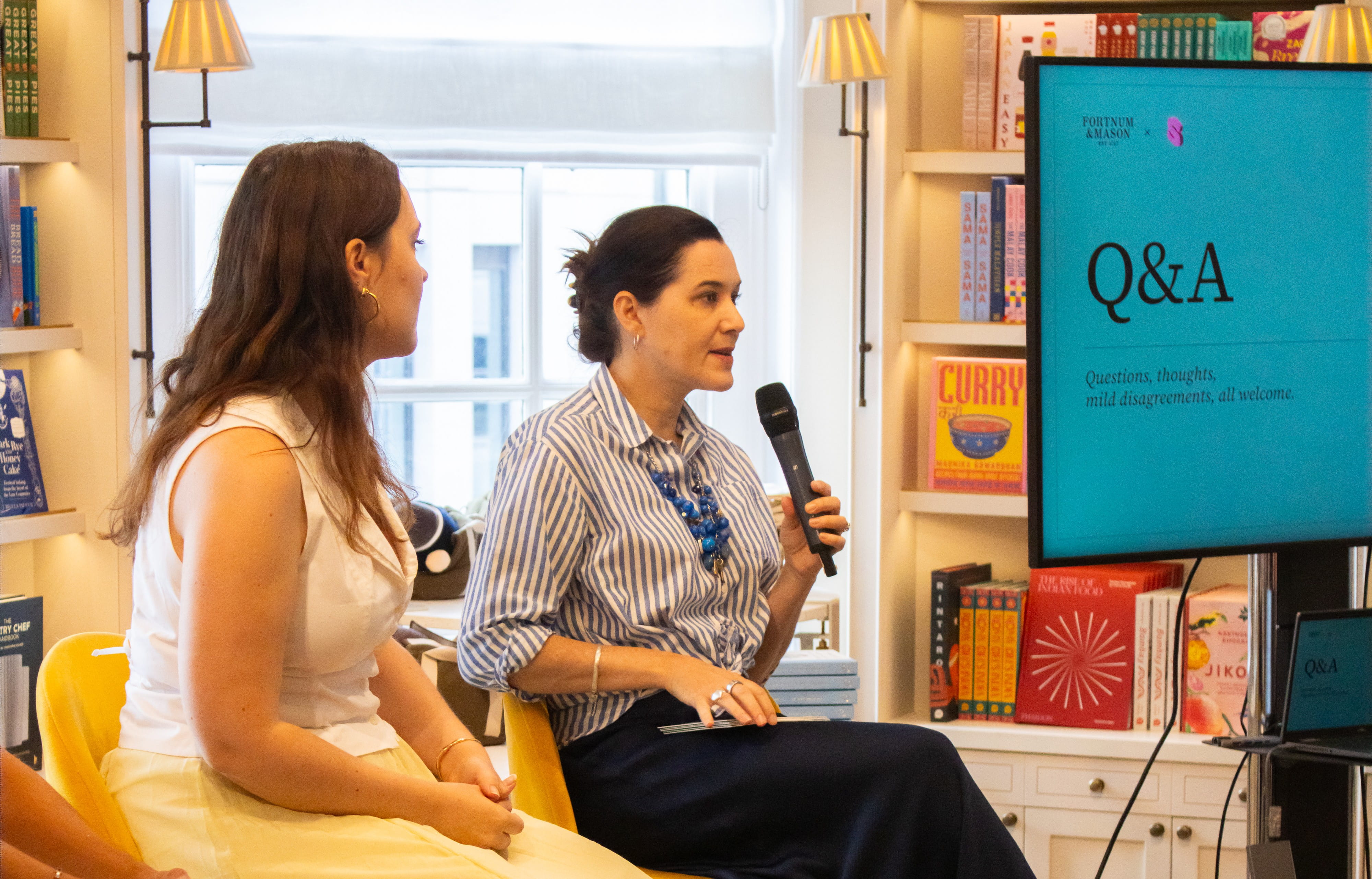
How do heritage brands embrace a social-first world without losing the things that made people care about them in the first place? Find out here.
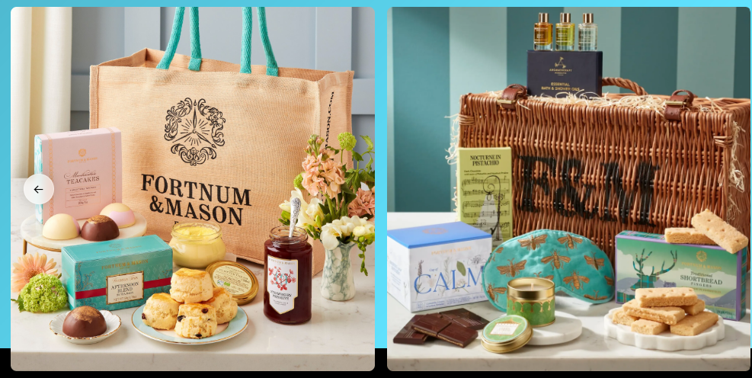
History gives heritage brands a head start, not a free pass. See why social is essential for staying relevant.